


Battery energy storage is key to powering a new chapter in South Africa’s manufacturing sector




This article has been supplied and will be available for a limited time only on this website.
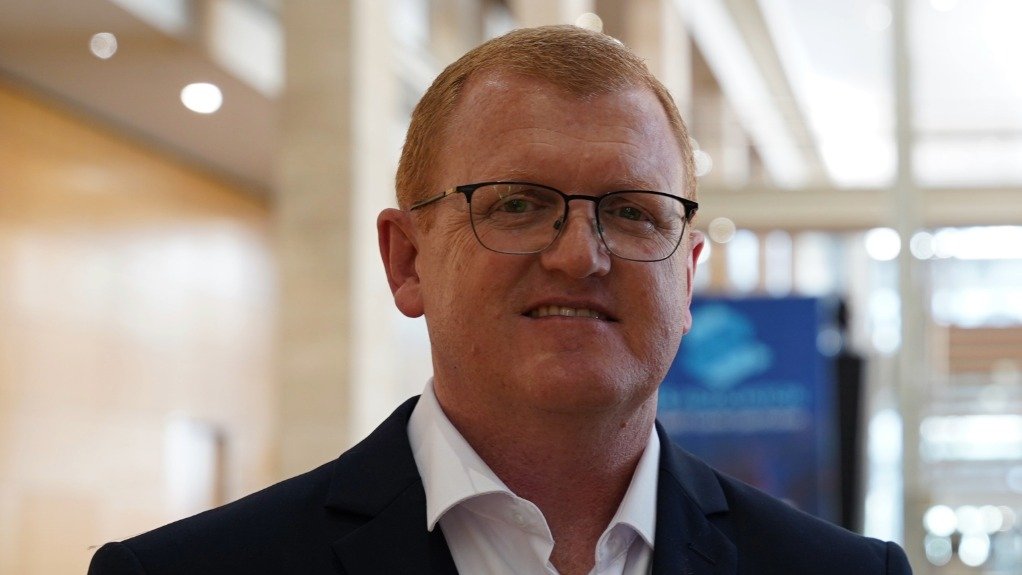
By: Richard van Moltke - General Manager at ACTOM Static Power
South Africa’s manufacturing sector is under increasing strain, squeezed by soaring energy costs, an unreliable power supply and mounting competition from imported technologies. Yet this coincides with a key national pivot towards renewable energy, which presents a significant opportunity in the shape of the rise of battery energy storage systems, and the chance to build a competitive local manufacturing base around them.
As South Africa accelerates its shift to renewables, battery storage has become indispensable to keeping the system stable. Variable generation inevitably places strain on the grid, from voltage swings to frequency fluctuations, and Eskom has increasingly turned to storage as the fastest, most effective way to smooth those pressures.
A distributed network of batteries located near generation sites can provide the flexibility the grid currently lacks, while also absorbing the midday oversupply of solar power that is now being curtailed. By storing that excess energy for the evening and early‑morning peaks, battery systems strengthen both grid reliability and the economics of renewable power.
Market challenges
However, a significant challenge faced by the renewables sector is the surge in imported products that effectively destabilise the market. Local manufacturers cannot compete with ultra‑low‑cost PV modules from China, nor with the growing influx of cut‑price batteries. The result is a volatile environment in which domestic producers are undercut before they can scale, let alone secure the long‑term investment needed to anchor a local energy‑storage industry.
A further constraint is the stop‑start flow of orders on large renewable projects. Without a steady “heartbeat” of demand, manufacturers cannot operate or plan efficiently. Irregular bursts of work leave factories idling, skills underutilised, and margins eroded. When developers source cheaper products from the East, local producers lose not just the order, but the continuity needed to stay viable. A predictable baseline of demand is essential to keep South Africa’s manufacturing capacity alive.
Cell manufacturing is, by nature, capital‑intensive and highly specialised, and while government is exploring the feasibility of a local cell plant – given South Africa’s access to key raw materials – its viability ultimately hinges on consistent demand and long‑term bankability.
Demonstrable financial stability
A manufacturer offering 10‑year warranties must be able to demonstrate 10‑year financial stability, and that remains a major hurdle. Without substantial state support, a domestic cell factory is unlikely to be competitive in the near term. For now, importing cells – which account for roughly 40-45% of the final product cost – remains the most practical route, especially given China’s mature, integrated supply chain.
The remaining 55-60% of value, however, can be produced locally, and this is where companies like ACTOM Static Energy compete strongly. Despite importing cells, ACTOM Static Energy matches imported complete products on price and outperform many due to its unique technical design, backed by the bankability that comes with more than a century of manufacturing history.
Sustained demand is also the foundation for meaningful job creation and skills development. The larger and more predictable the pipeline, the more manufacturers can invest in Research and Development (R&D), a necessity in a sector where battery technology evolves continuously. Designs do not stand still for a decade; cell capacities, chemistries and configurations shift rapidly, and keeping pace requires both capital and specialised talent.
Balancing operations with R&D
Manufacturers must balance day‑to‑day operations with ongoing R&D. With a stable market, this balance becomes far easier, enabling companies to expand their engineering capability, bring young talent into the sector, and build a broader skills base. Over the next two to three years, the sector anticipates significant growth and the creation of new jobs across both low‑ and high-skilled categories.
A successful battery‑storage industry in South Africa will depend on technology designed for local realities, from climate and grid conditions to the skills available to maintain equipment in remote areas. Imported systems are often judged on headline specifications, yet they are not always suited to African operating environments, nor do they account for long‑term maintenance, safety, or lifecycle costs.
Ultimately, the local market needs solutions engineered for durability, reliability and ease of upkeep, backed by companies with the financial strength to honour decade‑long warranties. As the sector matures, the ability to provide complete, locally appropriate systems – not just battery modules – will be essential to building trust, ensuring performance and supporting the country’s broader energy transition.
Article Enquiry
Email Article
Save Article
Feedback
To advertise email advertising@creamermedia.co.za or click here
Research Reports

Projects


Latest Multimedia

Latest News
Showroom

Astore Keymak is one of South Africa’s leading suppliers of high-quality Thermoplastic Pipeline Systems, with branches in the major provinces.
VISIT SHOWROOM
We at Hawk High Pressure Pumps specialise in industrial pumps and pumping systems. Our high pressure washing equipment is locally manufactured and...
VISIT SHOWROOM



Press Office
Announcements
What's On
Subscribe to improve your user experience...
Option 1 (equivalent of R125 a month):
Receive a weekly copy of Creamer Media's Engineering News & Mining Weekly magazine
(print copy for those in South Africa and e-magazine for those outside of South Africa)
Receive daily email newsletters
Access to full search results
Access archive of magazine back copies
Access to Projects in Progress
Access to ONE Research Report of your choice in PDF format
Option 2 (equivalent of R375 a month):
All benefits from Option 1
PLUS
Access to Creamer Media's Research Channel Africa for ALL Research Reports, in PDF format, on various industrial and mining sectors
including Electricity; Water; Energy Transition; Hydrogen; Roads, Rail and Ports; Coal; Gold; Platinum; Battery Metals; etc.
Already a subscriber?
Forgotten your password?
Receive weekly copy of Creamer Media's Engineering News & Mining Weekly magazine (print copy for those in South Africa and e-magazine for those outside of South Africa)
➕
Recieve daily email newsletters
➕
Access to full search results
➕
Access archive of magazine back copies
➕
Access to Projects in Progress
➕
Access to ONE Research Report of your choice in PDF format
RESEARCH CHANNEL AFRICA
R4500 (equivalent of R375 a month)
SUBSCRIBEAll benefits from Option 1
➕
Access to Creamer Media's Research Channel Africa for ALL Research Reports on various industrial and mining sectors, in PDF format, including on:
Electricity
➕
Water
➕
Energy Transition
➕
Hydrogen
➕
Roads, Rail and Ports
➕
Coal
➕
Gold
➕
Platinum
➕
Battery Metals
➕
etc.
Receive all benefits from Option 1 or Option 2 delivered to numerous people at your company
➕
Multiple User names and Passwords for simultaneous log-ins
➕
Intranet integration access to all in your organisation
